Well Pump Short Cycling 101: Causes, Quick Tests, and Repair Options
- What “Short Cycling” Means (and Why It Matters)
- Common Causes of Well Pump Short Cycling
- Well Pump Short Cycling 101: Quick Tests You Can Do Safely
- Repair Options (and When to Call a Pro)
- What Most Guides Miss
- Key Takeaways
- Conclusion: Fixing Short Cycling Before It Burns Out Your Pump
- Related Posts
- Further Reading
Well Pump Short Cycling 101: Causes, Quick Tests, and Repair Options
Well Pump Short Cycling 101: Causes, Quick Tests, and Repair Options is your practical guide to diagnosing a pump that turns on and off too often. Short cycling can reduce pump life, raise electric bills, and leave you with inconsistent water pressure. The good news: many causes can be narrowed down quickly with a few safe, basic checks—and you’ll know when it’s time to call a pro.
What “Short Cycling” Means (and Why It Matters)
A well pump is “short cycling” when it starts and stops rapidly—often every few seconds to a minute—during normal water use. In a healthy system, the pressure tank stores water and compressed air, allowing the pump to run for a longer, steadier cycle and then rest. Short cycling usually means the system can’t maintain stable pressure or isn’t storing usable water volume in the pressure tank.
Why it matters:
- Wear and tear: Frequent starts are hard on motors, capacitors, and controls.
- Higher energy use: Starting current spikes can increase operating costs.
- Pressure issues: You may feel pulsing flow at faucets and showers.
- Risk of failure: Extended short cycling can lead to premature pump burnout.
Common Causes of Well Pump Short Cycling
Short cycling can come from several components, but most cases fall into a few categories. Use these as your initial “most likely” list.
1) Waterlogged or Failed Pressure Tank (Bladder/Diaphragm Issues)
If the pressure tank’s internal bladder/diaphragm fails—or the air charge is wrong—the tank can’t store the right amount of pressurized water. The pump then has to kick on immediately when you open a tap.
- Symptom: Pressure jumps quickly from cut-in to cut-out, then drops quickly again.
- Clue: Tank feels heavy and “solid” when tapped (no hollow sound changes).
2) Incorrect Pressure Tank Precharge
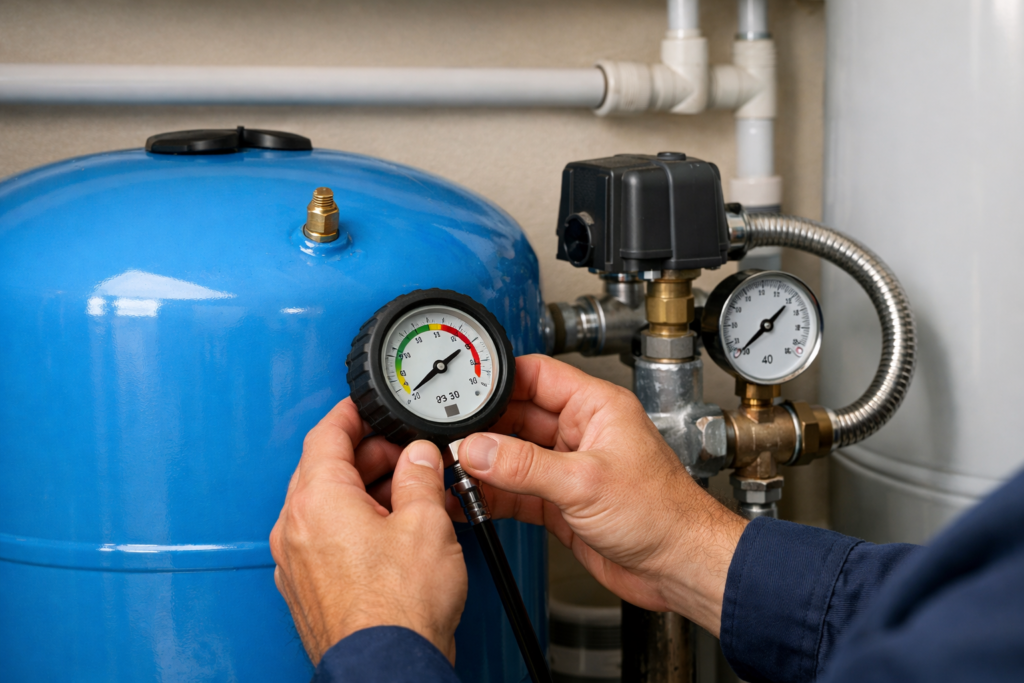
Even if the bladder is intact, the air precharge may be too low or too high. For many homes, the tank’s air charge should be set to 2 PSI below the pressure switch cut-in (e.g., 28 PSI for a 30/50 switch), measured with the tank empty of water.
- Symptom: Rapid cycling, especially when using small amounts of water.
- Clue: Air pressure at the tank valve doesn’t match the expected precharge.
3) Pressure Switch Problems (Misadjusted, Clogged, or Failing)
A pressure switch senses water pressure and tells the pump when to start/stop. Sediment can clog the sensing port, contacts can pit, and settings can drift.
- Symptom: Pump chatter, inconsistent cut-in/cut-out points, or arcing at the switch.
- Clue: Pressure gauge and switch behavior don’t align (e.g., switch toggles too early).
4) Leaks in Plumbing, Check Valve, or Foot Valve
A leak on the house side can cause pressure to drop quickly, triggering the pump repeatedly. A leaking check valve (or foot valve for some setups) can let water drain back toward the well, forcing frequent restarts.
- Symptom: Pump cycles even when no water is being used.
- Clue: Pressure slowly falls with all fixtures off.
5) Clogged Filters, Iron/Sediment Buildup, or Restricted Flow
Restrictions can cause abnormal pressure behavior. In some cases, the pump reaches cut-out pressure quickly because water isn’t moving freely into the plumbing system.
- Symptom: Low flow at fixtures combined with quick rises on the pressure gauge.
- Clue: Recently changed filter? Or filter is overdue and visibly dirty.
6) Undersized or Mismatched Pressure Tank
If the pressure tank is too small for the pump output and household demand, the system may cycle too often—especially with modern high-flow pumps and multiple fixtures.
- Symptom: Cycling is worse during normal tasks like handwashing or toilet refills.
- Clue: Very short run times even after confirming correct precharge.
Well Pump Short Cycling 101: Quick Tests You Can Do Safely
These checks are designed to help you isolate the most common causes without specialized tools. If you’re uncomfortable working around electrical components or pressurized plumbing, stop and call a professional.
Test 1: Watch the Pressure Gauge While Running Water
- Open a faucet or hose bib to create steady water demand.
- Watch the pressure gauge and listen to the pump.
- Note how quickly pressure rises to cut-out and drops to cut-in.
What it tells you: Very fast pressure swings typically point to a tank air/bladder issue or incorrect precharge.
Test 2: Check for “Phantom” Cycling (No Water Use)
- Turn off all water fixtures and appliances (including ice makers).
- Observe the gauge for 10–20 minutes.
- Listen for the pump turning on unexpectedly.
What it tells you: Pressure drop with no water use suggests a leak, a bad check valve/foot valve, or a toilet/fixture leak inside the home.
Test 3: Inspect and Replace the Sediment Filter (If Present)
- Locate your whole-house filter.
- Confirm the cartridge is not clogged; replace if dirty or overdue.
- Re-test cycling behavior.
What it tells you: Eliminating a restriction can stabilize flow and reduce abnormal pressure behavior.
Test 4: Basic Pressure Tank “Tap” Check
With the pump off, lightly tap the tank from top to bottom.
- Normal: You may hear a change from more hollow (air) near the top to more solid (water) lower down.
- Potential problem: Uniform solid sound can indicate a waterlogged tank.
Note: This is a rough indicator, not a definitive diagnosis.
Repair Options (and When to Call a Pro)
Once you’ve narrowed the likely cause, consider these typical repair paths. Some are DIY-friendly; others are best handled by a licensed well technician.
Adjust the Pressure Tank Air Precharge
For a bladder-style tank, the precharge is typically set to 2 PSI below cut-in, measured with the system depressurized. If you don’t have a reliable gauge or aren’t sure how to safely drain the tank, hire a technician.
Replace a Failed Pressure Tank
If the bladder is ruptured or the tank is waterlogged, replacement is often the most cost-effective long-term fix. Correct sizing matters: a larger tank can significantly reduce cycling and extend pump life.
Repair Leaks or Replace a Bad Check Valve
Leaks may be in visible plumbing, toilets, hydrants, or underground lines. A professional can pressure-test sections and isolate the source. A failing check valve can be a straightforward swap in some systems, but in others it may require pulling the pump.
Service or Replace the Pressure Switch
A new pressure switch is relatively inexpensive, but correct installation and safe electrical work are essential. If you see burnt contacts or hear buzzing/arcing, shut the system down and call a pro.
Upgrade a Too-Small Pressure Tank (or Add a Cycle Stop/Control Solution)
If the system is technically “working” but cycles constantly during everyday use, you may need more drawdown capacity. A qualified installer can recommend a properly sized tank and compatible controls for your pump.
What Most Guides Miss
- Run-time matters more than on/off count: A pump that runs only 10–20 seconds per cycle is at higher risk than one running 1–2 minutes per cycle.
- Gauge accuracy is often poor: A sticky or failing pressure gauge can mislead diagnostics—if readings seem odd, replace the gauge before chasing complex issues.
- Small household draws are the real test: Short cycling often shows up during toilet refills and handwashing, not during high-flow hose use.
- Water chemistry accelerates failures: Iron, sediment, and scale can foul switch ports, clog filters, and reduce effective tank performance.
- Tank sizing is a prevention tool: Many systems are installed with the minimum tank; upsizing can be one of the best long-term investments for pump longevity.
Key Takeaways
- Short cycling usually points to pressure tank air/bladder problems, switch issues, or leaks.
- Watch the pressure gauge behavior during water use to quickly narrow the cause.
- If the pump cycles with no water running, suspect leaks or a check/foot valve problem.
- Correctly setting tank precharge and right-sizing the tank can prevent repeat failures.
- Electrical or pull-the-pump work is best left to a qualified well professional.
Conclusion: Fixing Short Cycling Before It Burns Out Your Pump
Well Pump Short Cycling 101: Causes, Quick Tests, and Repair Options comes down to a simple goal: restore stable pressure and longer run cycles so the pump isn’t constantly starting and stopping. Start with observation (pressure gauge behavior), rule out restrictions, and look for leaks or a compromised pressure tank. If the cause isn’t obvious—or if you’re dealing with electrical components, check valves, or anything that may require pulling the pump—schedule professional service promptly to avoid a bigger failure. To get the job done right, search for a verified septic and well professional on our site.
Find a verified septic and well professional near you
Related Posts
- Can You Use a Garbage Disposal with a Septic System? Dos, Don’ts, and Best Practices
- Buying a Home with a Well & Septic: What to Inspect Before You Close
- How Much Does a New Septic System Cost in 2026?