How Much Does a New Septic System Cost in 2026?
Whether you’re building a new home, replacing a failed system, or converting from a cesspool, installing a new septic system is a major investment. Septic system cost varies widely depending on where you live, your soil conditions, and the type of system you need. Here’s a realistic look at what to expect in 2026.
Average Septic System Cost by Type
Not all septic systems are the same. The type your property requires depends on your soil’s ability to absorb and filter wastewater, your lot size, the water table level, and local health department regulations. Conventional gravity system: $7,000 – $15,000. This is the most common and least expensive option. It uses gravity to move effluent from the tank to the drain field. It works well on properties with good soil percolation and adequate space. Chamber system: $8,000 – $18,000. Instead of gravel-filled trenches, these use plastic chambers that allow effluent to contact the soil. They’re easier to install and work well in areas with high groundwater tables. Aerobic treatment unit (ATU): $12,000 – $25,000. These inject oxygen into the treatment process, producing cleaner effluent. They’re required in areas with poor soil or near sensitive water bodies. ATUs also require ongoing maintenance, including electrical costs and periodic inspections. Mound system: $15,000 – $30,000. When the natural soil isn’t suitable for a conventional drain field — due to shallow bedrock, high water table, or poor percolation — a mound system builds an elevated sand bed above the natural ground. Sand filter system: $15,000 – $25,000. These route effluent through a sand-filled box before it reaches the drain field, providing an extra level of treatment. Drip distribution system: $18,000 – $30,000+. The most precise (and expensive) option, drip systems deliver small, timed doses of effluent to the soil through a network of tubing.
What Factors Affect Septic System Cost?
Beyond the system type, several variables can push costs up or down. Soil conditions and perc testing. Every septic installation starts with a percolation (perc) test to determine how well your soil absorbs water. If your soil fails the standard test, you’ll need a more expensive system. The perc test itself typically costs $500 to $1,500. Tank size. Septic tanks are sized based on the number of bedrooms in your home (not the number of occupants). A three-bedroom home typically requires a 1,000-gallon tank, while a five-bedroom home may need 1,500 gallons or more. Tank material. Concrete tanks are the most common and durable ($1,000 to $2,000). Plastic and fiberglass tanks are lighter and easier to install ($1,200 to $2,500) but may not be allowed in all jurisdictions. Permits and engineering. Expect $500 to $2,000 for permits, soil evaluations, and site engineering. Some counties require a licensed engineer to design the system. Excavation and terrain. Rocky soil, steep slopes, or difficult access can significantly increase excavation costs. Location. Labor and material costs vary by region. Systems in the Northeast and West Coast tend to cost 20–30% more than the national average.
Replacement vs New Installation Costs
Replacing a failed system on an existing property typically costs 10–20% more than a new installation on a vacant lot. The additional cost comes from removing the old system, working around existing structures, and potentially needing a different system type if the original drain field area is compromised. If your current system has failed (here’s how to tell), ask your contractor whether the drain field can be rehabilitated or if a completely new field is required.
Financing Options for a New Septic System
USDA Rural Development loans and grants. The Single-Family Housing Repair program offers grants up to $10,000 and loans up to $40,000 for eligible rural homeowners. Clean Water State Revolving Fund. Many states offer low-interest loans for septic system replacement through this EPA-funded program. Local health department programs. Some counties offer grants or zero-interest loans for septic upgrades, particularly near sensitive waterways. Home equity loans or lines of credit. If you have equity in your home, this can be a cost-effective financing option. Contractor payment plans. Many septic installers offer financing. Ask during the bidding process.
Tips to Save Money on Your Septic System
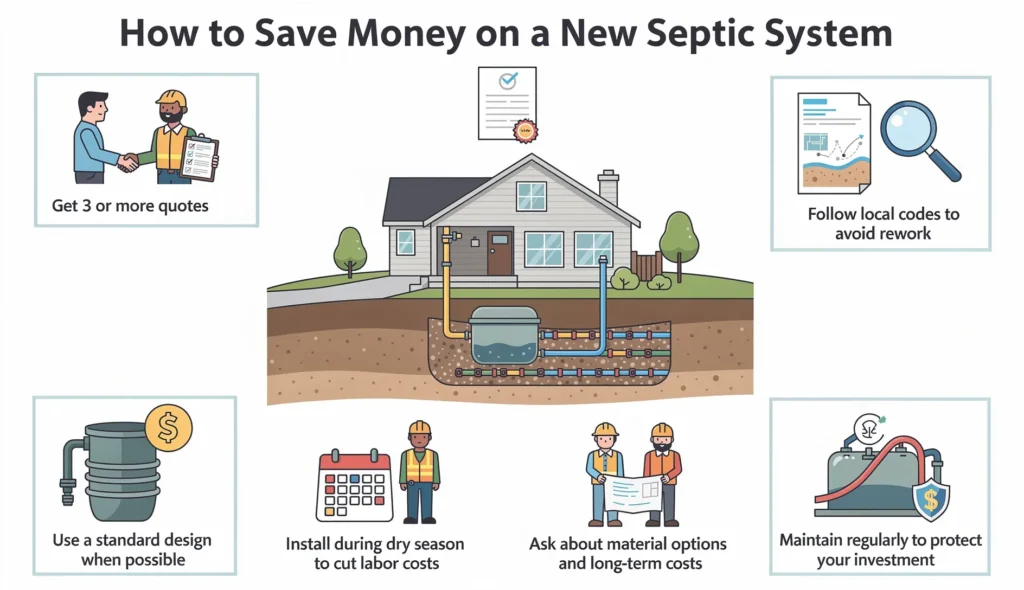
Get at least three quotes. Prices can vary significantly between contractors for the same scope of work. Schedule in the off-season. Fall and early spring are typically slower periods for septic installers. Choose the simplest system your site allows. A conventional gravity system costs half as much as a mound system. Don’t over-engineer if your soil supports a simpler design. Maintain the new system properly. The best way to protect your investment is to follow a regular pumping schedule, conserve water, and avoid flushing anything that doesn’t belong in a septic system.
The Bottom Line
A new septic system is a significant expense, but it’s also essential infrastructure that protects your home, your health, and your property value. Understanding the septic system cost factors before you start getting quotes puts you in a much stronger position to make informed decisions. Ready to get quotes? Search our directory to find licensed septic installers in your area.