Septic Repair in Houston, TX: Find the Right Pro, Avoid Costly Backups
Map
Septic Repair in Houston, TX
Septic Repair in Houston, TX is a little different than in many parts of the country because Houston-area soils, heavy rain events, and a naturally high water table can stress drainfields and tanks. If you’re noticing slow drains, sewage odors, soggy spots in the yard, or a sudden spike in pump alarms, the safest move is to bring in a qualified septic professional who can diagnose the cause before damage spreads to the drainfield or your home.
If you’re troubleshooting a similar issue, this guide may help: Heavy Rain and Flooding: How Wet Weather Impacts Septic Systems and Wells (Signs, Risks, and Prevention). For background reading from a trusted source, see EPA guidance on septic systems.
This guide walks Houston homeowners through realistic timelines, common failure points, typical repair cost drivers, and what to ask so you can hire with confidence and avoid repeat problems.
Key Takeaways
- Houston’s rainfall and water table can overwhelm drainfields—repairs often need hydraulic and soil-aware solutions, not just parts swaps.
- Accurate diagnosis matters: tank, pump, filter, and drainfield issues can look similar from inside the house.
- Costs vary widely based on access, system type, and whether the drainfield is affected.
- Permits and inspections may apply—especially for major repairs, replacements, or work near wetlands/floodplains.
What to Expect
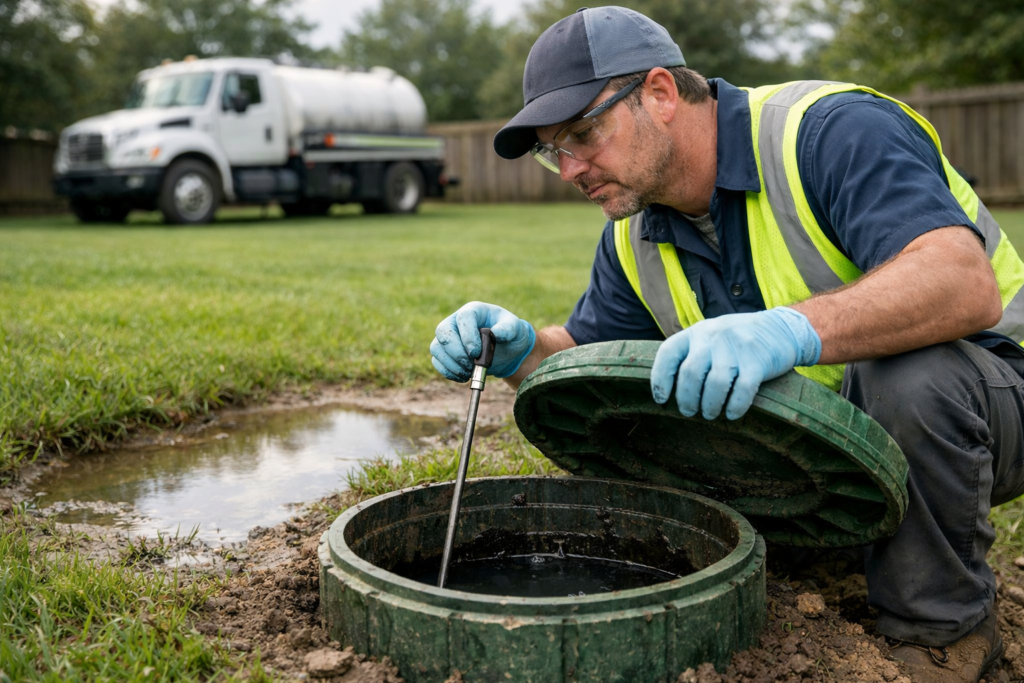
Most Septic Repair in Houston, TX starts with a site visit and troubleshooting. A reputable pro will look at symptoms inside, open and inspect the tank (when safe), evaluate components (baffles/tees, effluent filter, pumps/floats), and check the drainfield area for saturation or surfacing effluent.
- Same-day triage: Minor issues (clogged effluent filter, failed float switch, tripped breaker, blocked line) can sometimes be resolved in 1–3 hours.
- 1–3 days: Parts sourcing and return visit for pump replacement, control panel repair, or line jetting may take an extra day or two.
- 1–3+ weeks: Drainfield repair/rebuild or system modifications typically involve permitting, scheduling equipment, and allowing the site to dry enough to work—Houston’s wet seasons can extend timelines.
Uncommon but practical insight: In Houston, timing work for a drier window can be as important as the repair itself. Excavating saturated soil can smear and compact it, reducing percolation and shortening drainfield life.
Common Problems We See
- Hydraulic overload after storms: heavy rainfall saturates soil, leaving nowhere for effluent to go.
- Clogged effluent filters causing backups and gurgling (often after high water use or missed maintenance).
- Lift pump failures (common where systems rely on pumps to move effluent to the drainfield).
- Float or alarm issues leading to intermittent failures that mimic a “mystery clog.”
- Root intrusion into older lines near trees and shrubs.
- Crushed or bellied sewer lines from soil movement or vehicle traffic over buried piping.
- Drainfield biomat buildup from years of under-pumping, grease, or using harsh chemicals that disrupt treatment.
- Improper grading or downspout discharge sending roof runoff into the drainfield zone.
Uncommon but practical insight: A recurring “wet spot” isn’t always a failed drainfield—sometimes it’s a broken irrigation line or poor yard drainage. A good pro will rule out non-septic water sources before recommending major work.
Typical Costs & Pricing Factors
Prices vary by neighborhood, access, system design, and whether the drainfield is involved. The ranges below are estimates to help you budget and compare quotes.
- Diagnostic visit: often a flat fee or hourly rate (estimate: $150–$450 depending on scope and travel).
- Effluent filter cleaning/replacement: (estimate: $150–$500).
- Pipe clearing/jetting: (estimate: $300–$1,200 depending on length and difficulty).
- Lift pump replacement: (estimate: $800–$2,500+ including parts and labor).
- Control panel/float repair: (estimate: $250–$1,500).
- Tank repairs (baffles/tees, risers, lid replacement): (estimate: $300–$2,000).
- Drainfield repair or partial replacement: (estimate: $3,500–$12,000+).
- Full system replacement: (estimate: $8,000–$25,000+ depending on soil, lot constraints, and system type).
Pricing factors in Houston often include:
- Soil and groundwater conditions: high water tables may require raised beds, aerobic units, or alternative dispersal methods.
- Access: tight side yards, fencing, and landscaping can add labor and equipment time.
- System type: aerobic systems and pumped systems have more components to diagnose and repair.
- Wet-weather scheduling: crews may need to wait for soil conditions or use mats to reduce yard damage.
Uncommon but practical insight: Ask whether the quote includes a post-repair performance check (e.g., pump cycle verification, alarm testing, and confirming water levels at the tank). It’s a small step that prevents “fixed today, failing tomorrow.”
Permits, Inspections, and Local Considerations
Houston-area septic rules can vary depending on whether you’re inside city limits, in Harris County, or in surrounding counties and MUD jurisdictions. In many cases, minor repairs (like replacing a pump or a broken lid) may not require the same level of permitting as major repairs (like drainfield replacement, tank replacement, or changes to system capacity). Your contractor should help you determine what applies.
- Floodplains and drainage: Some properties are in or near flood-prone areas. Repairs may need added protections against inflow and saturation, and site plans may be reviewed more closely.
- High rainfall planning: Directing roof runoff away from the drainfield and avoiding compaction in the dispersal area can be part of a “repair that lasts.”
- Setbacks: Drainfields and tanks must maintain minimum distances from wells, property lines, waterways, and structures (requirements depend on your jurisdiction).
- Inspections: For significant work, you may need an inspection before backfill or approval of as-built drawings.
Uncommon but practical insight: If your system uses a timer-controlled aerobic unit, confirm the repair includes verifying timer settings. Incorrect run-times can cause either poor treatment (too short) or premature wear (too long)—both costly over time.
How to Choose the Right Pro
Use this checklist to compare septic companies beyond price. The goal is a repair that addresses the root cause—not just the symptom.
- Clear diagnosis: They explain what failed, why it failed, and what would happen if you don’t fix it.
- Written scope of work: Includes parts, labor, disposal, restoration assumptions, and what’s excluded.
- Experience with your system type: conventional vs. aerobic, gravity vs. pumped, drip vs. spray, etc.
- Safety and access plan: Safe tank opening, confined-space awareness, and a plan to protect landscaping.
- Local permit familiarity: They can tell you if permits/inspections are needed and who pulls them.
- Warranty clarity: Written warranty on parts and labor, plus what voids it (e.g., driving over the drainfield).
- Maintenance guidance: They give a pumping and filter schedule customized to household size.
Uncommon but practical insight: For recurring issues, ask whether they’ll perform a water-use stress test (e.g., controlled flow to observe pump cycles and tank levels). It can reveal intermittent failures that a quick glance misses.
Questions to Ask Before You Hire
- What specific evidence points to a tank issue vs. a drainfield issue?
- Will you inspect/clean the effluent filter as part of the visit?
- How will you confirm the repair worked (alarm test, pump drawdown test, level check)?
- Do you anticipate permits or an inspection for this scope?
- What yard disruption should I expect, and what restoration is included?
- If you’re replacing a pump, what pump model and rating are you installing and why?
- How can I reduce the risk of this happening again (water use, additives, grading changes)?
FAQ
How do I know if I need septic repair or just pumping?
Pumping helps if the tank is overdue and solids are too high, but it won’t fix failed pumps, broken baffles, line collapses, or a saturated drainfield. A pro should measure sludge/scum levels and inspect components before recommending next steps.
Is it safe to use my plumbing while waiting for a repair?
If you have backups, sewage odors, or an alarm, reduce water use immediately. Avoid laundry, long showers, and running the dishwasher until a professional advises it’s safe—especially if the drainfield area is saturated.
Why do septic problems get worse during Houston storms?
When soil is saturated, effluent can’t infiltrate properly, so the system loses its “exit path.” Stormwater also raises groundwater, which can flood trenches and reduce treatment effectiveness.
Can I fix an aerobic septic alarm myself?
You can check simple items like a tripped breaker, but many alarms involve floats, pumps, or control panels where incorrect handling can damage components or create safety risks. It’s usually best to schedule a septic technician.
Do septic additives help avoid repairs?
Routine additives are rarely a substitute for pumping and proper use. Some products can even stir solids and push them toward the drainfield. Focus on regular pumping, protecting the drainfield from traffic, and keeping grease/chemicals out.
What should I do if my yard smells like sewage near the drainfield?
Stop heavy water use, keep people and pets away from wet areas, and call for service. Odors plus wet soil can indicate surfacing effluent or a broken line that needs prompt attention.
How can I make a septic repair last longer in Houston?
Route gutters and surface drainage away from the drainfield, avoid driving/parking over septic areas, keep roots away from lines, and follow a pumping schedule matched to household size and tank capacity.
Conclusion: Septic Repair in Houston, TX is most successful when the contractor diagnoses the true failure point and accounts for local conditions like heavy rain, high groundwater, and drainage patterns. Use the checklists and questions above to compare pros, protect your property, and invest in a repair that holds up through Houston’s wet seasons.