Stormwater vs Septic: How Gutters, Sump Pumps, and Yard Drainage Can Prevent Sewage Backups
- Stormwater vs Septic: Why drainage choices can make (or break) your plumbing
- Stormwater vs Septic: What’s the difference and why it matters during storms
- How gutters prevent sewage backups (yes, gutters can be a plumbing upgrade)
- Sump pumps: Your last line of defense against stormwater pressure
- Yard drainage: grading, swales, and French drains to keep water away
- Stormwater vs Septic: How runoff can overload a drainfield and trigger backups
- What to do if you’re on municipal sewer (stormwater still matters)
- Key Takeaways
- Conclusion: Stormwater vs Septic—control runoff to prevent sewage backups
Stormwater vs Septic: Why drainage choices can make (or break) your plumbing
Stormwater vs Septic: How Gutters, Sump Pumps, and Yard Drainage Can Prevent Sewage Backups isn’t just a catchy comparison—it’s a practical way to understand why many “mystery” sewage backups start outside your home. When rainwater is mismanaged, it can saturate soil, overload drain systems, and push wastewater where it doesn’t belong. The good news: a few smart exterior upgrades often prevent costly emergency cleanups.
If you’re troubleshooting a similar issue, this guide may help: Septic Smells 101: Why Your Yard or Bathroom Stinks and the Fastest Fixes (Troubleshooting Guide). For background reading from a trusted source, see EPA guidance on septic systems.
Homeowners frequently assume sewage backups are only caused by clogged pipes or failing septic tanks. In reality, heavy rain and poor stormwater control can create the pressure and groundwater conditions that trigger backups in both municipal sewer homes and septic properties. Understanding stormwater (rain and runoff) versus septic (onsite wastewater treatment) helps you address the right problem—and avoid “fixes” that don’t last.
Stormwater vs Septic: What’s the difference and why it matters during storms
Stormwater is surface water from rainfall, snowmelt, and runoff. It should be managed away from your foundation and away from systems that handle sewage or household wastewater.
Septic is a private, onsite wastewater system that typically includes a septic tank and drainfield (leach field). It relies on healthy, unsaturated soil to absorb and treat effluent.
During prolonged or intense rain, stormwater can:
- Saturate the soil around a foundation, increasing hydrostatic pressure on basement slabs and walls.
- Raise the local water table, reducing a septic drainfield’s ability to absorb effluent.
- Overwhelm footing drains, sump systems, and municipal sewer laterals—especially if there are cracks or root intrusions.
Uncommon but practical insight: Even if your interior plumbing is in perfect condition, soil saturation alone can slow drainage to a crawl—because your home’s outflow ultimately depends on what’s happening downstream (municipal line capacity) or in the soil (septic drainfield capacity).
How gutters prevent sewage backups (yes, gutters can be a plumbing upgrade)
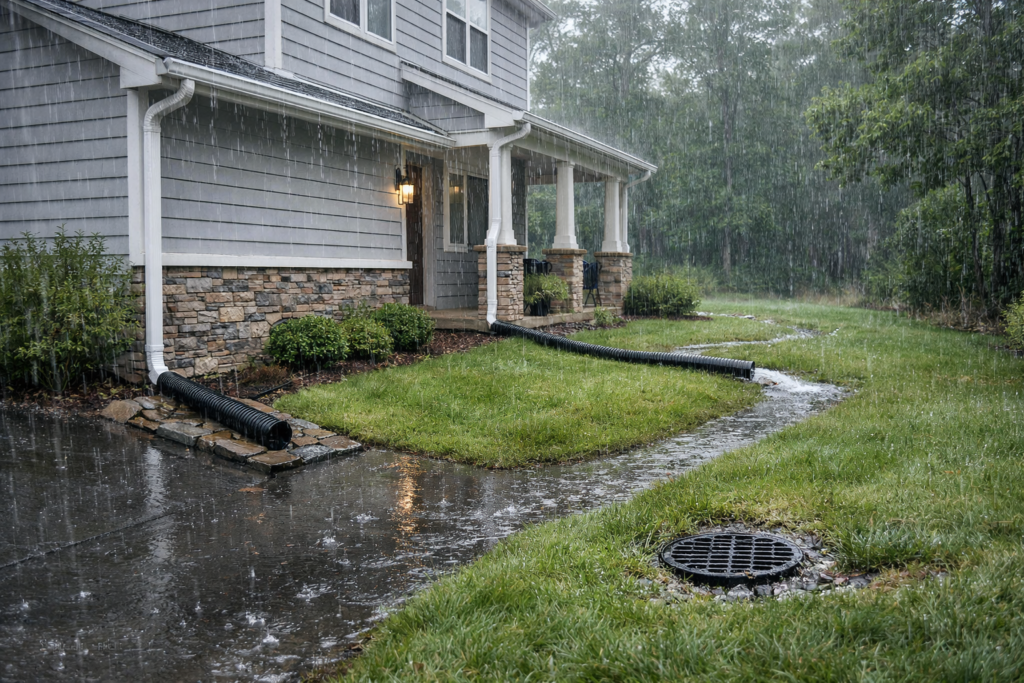
Gutters and downspouts are your home’s first stormwater control system. When they fail—or when downspouts discharge right next to the foundation—rainwater pools where it can do the most harm: along basement walls, above footing drains, and near sewer/septic components.
What to check on your gutters and downspouts
- Continuous flow: Clean gutters at least seasonally (more if you have trees). Overflowing gutters dump water at the foundation.
- Downspout discharge distance: Extend downspouts so they discharge at least 6–10 feet away from the foundation (or into a properly designed drain system).
- Correct pitch and splash control: Ensure gutters slope to downspouts and use splash blocks or buried tightline where appropriate.
Uncommon but practical insight: If you bury downspouts, avoid tying them into the sanitary sewer line. In many areas it’s illegal—and it can contribute directly to backups during storms. Instead, route to daylight, a dry well, or a dedicated storm drainage line that discharges legally and safely.
Sump pumps: Your last line of defense against stormwater pressure
A sump pump helps manage groundwater that collects under and around your basement. When rain saturates the soil, water is pushed toward the lowest point—often your foundation perimeter and sump basin. A properly sized and maintained pump can prevent flooding and reduce the conditions that contribute to sewage backups (especially where basements share space with drains, laundry, or low fixtures).
Ways sump pump systems help reduce backup risk
- Lowering groundwater levels: Pumping out groundwater reduces pressure that can force water through cracks and joints.
- Protecting low-level areas: Basements with floor drains and laundry tubs are common backup entry points when municipal systems surcharge.
- Preventing combined problems: Flooding plus sewage is a hazardous cleanup scenario; preventing water intrusion reduces the chance of contamination spreading.
Sump pump best practices (often overlooked)
- Battery backup or secondary pump: Storms often cause power outages—the same time you need pumping most.
- Check valve installation: Prevents discharged water from flowing back into the pit and short-cycling the pump.
- Proper discharge routing: Discharge should run away from the home and not dump next to the foundation or into an overburdened line.
Uncommon but practical insight: A sump pump that runs constantly in wet weather may indicate downspout or grading problems, not just “high groundwater.” Fixing exterior runoff can dramatically reduce pump wear and extend its lifespan.
Yard drainage: grading, swales, and French drains to keep water away
Yard drainage is where stormwater management becomes visible—and where the biggest gains are often made. If your yard slopes toward the home, water collects at the foundation and increases the likelihood of seepage, sump overload, and sewer/septic complications.
High-impact yard drainage improvements
- Regrade for positive slope: Aim for the ground to slope away from the foundation (commonly about 6 inches over the first 10 feet, where feasible).
- Swales and berms: A shallow swale can redirect sheet flow away from the home without underground piping.
- French drains (when appropriate): Subsurface drains can intercept groundwater and move it to a safe discharge point.
- Catch basins for low spots: If your yard has a “bowl,” a catch basin connected to a solid drain line can prevent pooling.
Uncommon but practical insight: Many French drain failures come from using filter fabric incorrectly (or not at all) and installing the wrong aggregate size. Sediment infiltration is a silent killer—so the details of layering and outlet protection matter as much as the trench itself.
Stormwater vs Septic: How runoff can overload a drainfield and trigger backups
If you have a septic system, stormwater management is directly connected to whether your system can function after heavy rain. A septic drainfield needs oxygenated, unsaturated soil. When stormwater saturates the area, effluent can’t infiltrate properly, and wastewater may back up into the house or surface in the yard.
Septic-specific drainage priorities
- Keep roof runoff away from the drainfield: Downspouts should never discharge toward or onto the leach field.
- Protect the reserve area: Many properties have a designated future drainfield area—keep it dry and uncompacted too.
- Avoid soil compaction: Driving or placing heavy items over the drainfield reduces pore space and worsens wet-weather performance.
Uncommon but practical insight: If your yard gets soggy over the drainfield only after rain, it can be a stormwater routing problem rather than a septic failure. Redirecting runoff and improving surface drainage sometimes restores normal performance without invasive septic work—though a septic professional should confirm.
What to do if you’re on municipal sewer (stormwater still matters)
Municipal sewer customers can still experience backups during storms—particularly in older neighborhoods with undersized infrastructure, combined sewer systems, or compromised sewer laterals. Excess stormwater infiltration (from cracks, joints, or illegal storm connections) can raise sewer levels and push sewage toward the lowest openings in homes.
Helpful safeguards for sewer-connected homes
- Backwater valve: Helps prevent reverse flow from the municipal main into your home (must be installed correctly and maintained).
- Maintain your sewer lateral: Periodic inspections can catch roots or defects that become failures during wet weather.
- Reduce stormwater infiltration near the foundation: Gutters, grading, and drainage reduce the groundwater load that can infiltrate aging pipes.
Key Takeaways
- Stormwater vs Septic is a critical distinction: rainwater belongs outside and away from wastewater systems.
- Well-maintained gutters and downspouts prevent foundation saturation that can contribute to backups.
- A sump pump with proper discharge and backup power reduces basement flood risk during storms.
- Yard drainage (grading, swales, French drains) keeps runoff from pooling where it creates pressure and saturation.
- For septic homes, keeping stormwater off the drainfield can prevent wet-weather failures and indoor backups.
Conclusion: Stormwater vs Septic—control runoff to prevent sewage backups
Stormwater vs Septic: How Gutters, Sump Pumps, and Yard Drainage Can Prevent Sewage Backups comes down to one principle: manage water before it becomes pressure, saturation, and reverse flow. By directing roof runoff away from the home, ensuring your sump system is resilient, and shaping your yard to shed water properly, you reduce the conditions that cause backups—whether you rely on a municipal sewer or a private septic system.
If you’re dealing with recurring wet-weather drainage issues, consider starting with an exterior water audit (gutters, downspouts, grading, and discharge points) before assuming the worst about your plumbing or septic tank. Often, the most cost-effective “sewage backup prevention” work happens in the yard.