Septic Inspection FAQ: What Inspectors Check, Common Failure Points, and How to Prepare
- Septic Inspection FAQ: What Inspectors Check, Common Failure Points, and How to Prepare (Quick Overview)
- What a Septic Inspector Checks (Step-by-Step)
- Common Septic Failure Points (and What They Look Like)
- Septic Inspection FAQ: What Inspectors Check, Common Failure Points, and How to Prepare (Homeowner Prep Checklist)
- What Most Guides Miss
- Septic Inspection FAQs
- Key Takeaways
- Conclusion: Use This Septic Inspection FAQ to Avoid Costly Surprises
- Related Posts
Whether you’re buying a home, selling, or staying proactive as an owner, Septic Inspection FAQ: What Inspectors Check, Common Failure Points, and How to Prepare helps you understand what happens during an inspection—and how to avoid expensive surprises. A septic system is out of sight most of the time, but it’s one of the most critical (and costly) systems on the property. The good news: most issues are preventable when you know what inspectors look for and how to get your system ready.
Septic Inspection FAQ: What Inspectors Check, Common Failure Points, and How to Prepare (Quick Overview)
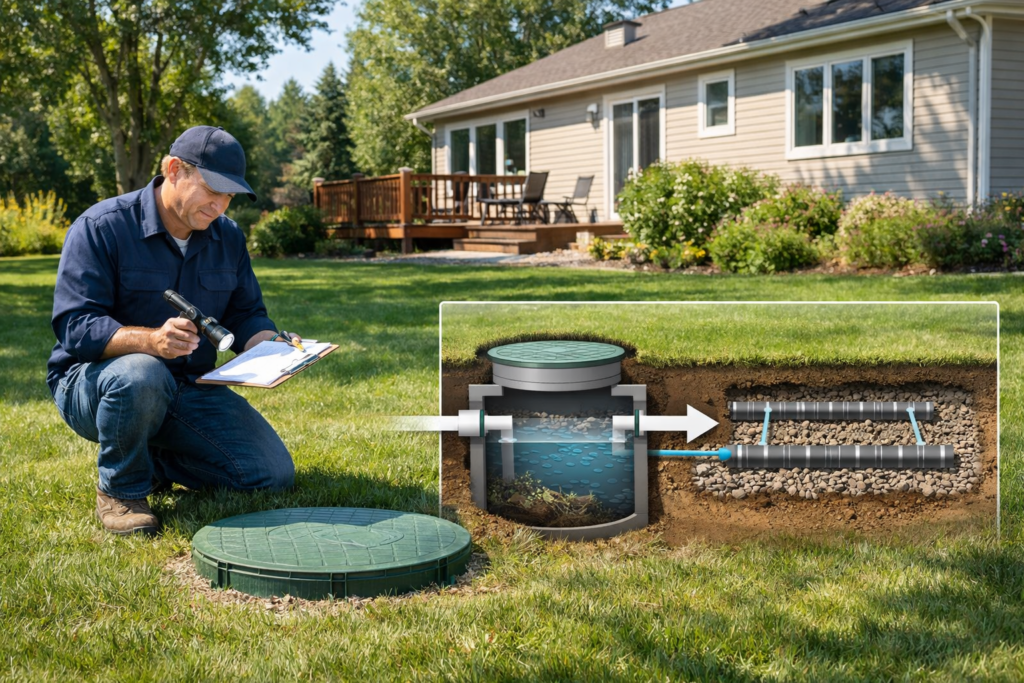
A septic inspection is typically a visual and functional evaluation of the tank, distribution components, and drainfield (also called the leach field). In many cases, the inspector will locate and open access lids, measure scum and sludge layers, test flows, and assess signs of hydraulic overload or failure. Local requirements vary, so the scope may range from a basic check to a more comprehensive evaluation that includes pump and alarm testing.
What a Septic Inspector Checks (Step-by-Step)
1) System location, permits, and as-built information
Inspectors often start by confirming where the tank and drainfield are located and comparing the layout to available records. If documentation is missing, they may use probing tools or locating equipment. This step helps identify red flags like building additions, driveways, or patios placed over system components.
- Tank and drainfield location relative to the house and property lines
- Setback compliance from wells, waterways, and structures (where applicable)
- Evidence of site changes that could harm performance (grading, compaction, landscaping)
2) Tank condition and access points
Once the tank is located, the inspector checks the lid(s), risers, and overall condition. Modern best practice is to have risers brought to grade for safer, easier maintenance. Cracked lids, damaged risers, or unsafe access can be a major issue, especially for real estate transactions.
- Structural integrity (cracks, collapse risk, corrosion)
- Lid safety and secure fit
- Signs of leaks around the tank top or seams
3) Sludge and scum levels (and whether pumping is overdue)
Many inspections include measuring sludge (solids) and scum (floatables) layers to estimate remaining capacity. A tank that’s overdue for pumping can push solids into the drainfield and accelerate failure.
- Sludge depth and scum thickness
- Baffle condition (inlet/outlet baffles prevent solids from exiting)
- Effluent clarity (a clue, not a definitive test)
4) Inlet/outlet baffles and tees
Baffles (or sanitary tees) are small components with a big job: they calm incoming flow and keep solids where they belong. Missing or deteriorated baffles are common and can lead to clogged lines and drainfield damage.
- Inlet baffle: prevents turbulence and protects the tank
- Outlet baffle: keeps solids from leaving the tank
- Effluent filter (if present): may be checked/cleaned depending on scope
5) Distribution system and drainfield performance
The drainfield is where treated effluent disperses into the soil. Inspectors look for conditions that suggest saturation or failure—like ponding, strong odors, unusually lush grass, or wet areas in dry weather.
- Standing water, soggy soil, or surfacing effluent
- Odors near the field
- Vegetation anomalies (green stripes can indicate trench lines)
- Soil and slope conditions that affect drainage
6) Pumps, alarms, and electrical components (for mound or aerobic systems)
If the system uses a pump chamber, dosing tank, or aerobic treatment unit, the inspector may test floats, alarms, and pump operation. Electrical failures are a frequent cause of backups in pumped systems.
- Pump function and cycle behavior
- Float switches (on/off and high-water alarm)
- Control panel and alarm status
Common Septic Failure Points (and What They Look Like)
Understanding typical failure points helps you interpret an inspection report and prioritize fixes.
- Clogged or failing drainfield: slow drains, gurgling, wet spots, sewage odors outside, or backups during high water use.
- Missing/damaged baffles: solids carryover into the field, recurring line clogs, rapid filter clogging.
- Overdue pumping: high sludge/scum levels, poor tank capacity, increased risk of field damage.
- Root intrusion: roots entering pipes/tank causing blockages and breaks (common near mature trees).
- Crushed or sagging pipes: often from vehicle traffic, settling, or improper installation.
- Hydraulic overload: too much water entering the system (leaky toilets, long showers, running irrigation near the field).
- Pump or float failure: alarms sounding, high water in pump chamber, intermittent backups.
- Improper surface drainage: downspouts or grading sending stormwater onto the drainfield.
Septic Inspection FAQ: What Inspectors Check, Common Failure Points, and How to Prepare (Homeowner Prep Checklist)
Preparation can make the inspection smoother and more accurate. Use this checklist a few days before the appointment.
- Find records: permits, as-builts, prior inspection reports, pumping receipts, and service history.
- Locate components: if you know where the lids/risers are, mark them (flags are helpful).
- Clear access: move vehicles, firewood, planters, or debris away from the tank and drainfield.
- Don’t pump “just to pass” unless advised: pumping right before an inspection can mask problems. If pumping is needed, coordinate it with the inspector so conditions are documented properly.
- Fix obvious indoor leaks: running toilets and dripping faucets can skew results and stress the system.
- Provide full utility access: ensure water is on and electrical access is available for pump/alarm testing.
- Manage water use: avoid unusually high laundry loads or long showers right before the visit.
What Most Guides Miss
- Water-use behavior matters as much as hardware: an inspection is a snapshot; consistent overload can “fail” a good system over time.
- Recent rain can change findings: saturated soils may mimic a failing field—ask how weather is factored into conclusions.
- Risers are an investment, not an upsell: safe, easy access reduces future service costs and encourages routine maintenance.
- Downspouts and sump pumps are silent drainfield killers: redirecting clean water away can dramatically improve longevity.
- Filters need a plan: if your outlet filter clogs regularly, it’s a symptom—often linked to pumping intervals or excess solids/grease.
Septic Inspection FAQs
How long does a septic inspection take?
Most inspections take 1–3 hours depending on system type, accessibility, and whether components are easy to locate and open.
Will the inspector dig up my yard?
Sometimes light digging is needed to find lids if there are no risers. If extensive excavation is required, the inspector should explain options and costs before proceeding.
What’s the difference between an inspection and pumping?
Pumping removes contents from the tank. An inspection evaluates condition and performance. Some visits combine both, but a “pump and go” without evaluation can miss important issues.
Can a septic system “pass” and still have problems?
Yes. A system may function today but show warning signs (aging components, marginal drainfield, high sludge levels). Good reports often include maintenance recommendations, not just pass/fail notes.
What happens if the system fails inspection during a home sale?
Outcomes vary by local rules and negotiation. Typical paths include repair/replacement credits, required fixes before closing, or escrow agreements. Ask the inspector for clear documentation and prioritize safety and environmental concerns.
Key Takeaways
- Inspectors evaluate the tank, baffles, sludge/scum levels, distribution, and drainfield signs of saturation or surfacing effluent.
- Common failures include drainfield clogging, baffle damage, root intrusion, hydraulic overload, and pump/float issues.
- Preparation helps: gather records, clear access, fix leaks, and coordinate pumping strategically.
- Surface drainage control (downspouts/sumps away from the field) can extend system life significantly.
Conclusion: Use This Septic Inspection FAQ to Avoid Costly Surprises
Septic Inspection FAQ: What Inspectors Check, Common Failure Points, and How to Prepare is ultimately about reducing risk—financial, environmental, and practical. When you understand what the inspector is evaluating and you prepare the site and records ahead of time, you’re far more likely to get clear answers and a realistic plan. If your report flags issues, treat it as a roadmap: prioritize safety problems first, address water-use and drainage next, and schedule routine pumping and maintenance to protect your drainfield for the long term.
If you want to learn more about septic maintenance best practices, see the EPA’s homeowner guidance: https://www.epa.gov/septic.