Buying a Home with a Well & Septic: What to Inspect Before You Close
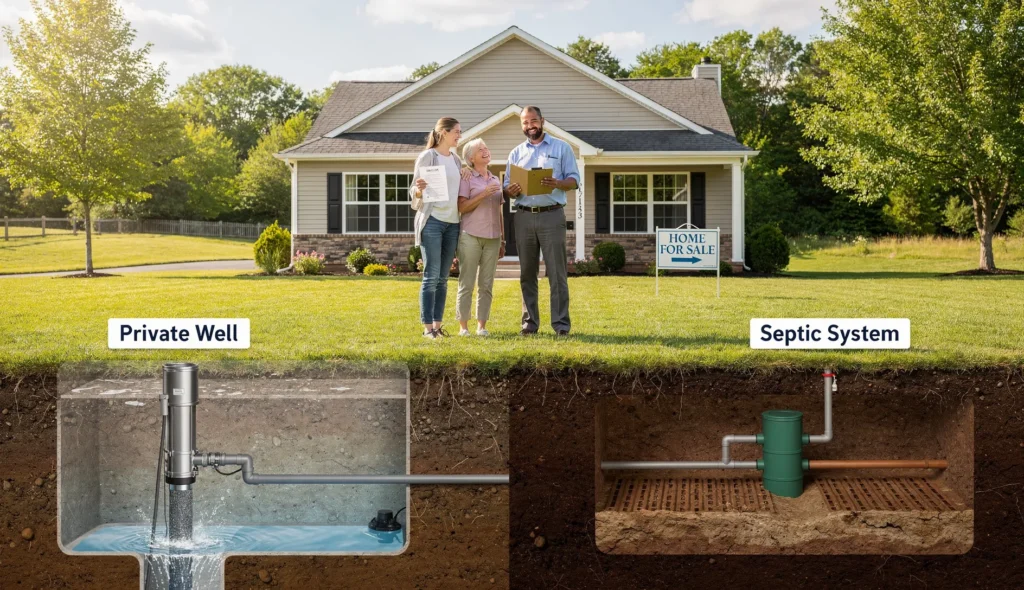
Roughly one in five homes in the United States relies on a private well and septic system. If you’re buying a home with a well and septic, the standard home inspection won’t tell you everything you need to know. Well and septic systems operate underground, out of sight — and a problem with either one can turn your dream home into a financial nightmare. Here’s exactly what to inspect, what to ask, and what red flags to watch for before you sign on the dotted line.
Why Standard Home Inspections Aren’t Enough When Buying a Home with Well and Septic
Most home inspectors check that water flows from the taps and toilets flush. That’s about it. They don’t test water quality, inspect the inside of a septic tank, or evaluate the condition of a drain field. These are specialized inspections that require different contractors — and they’re absolutely worth the investment. Budget $500 to $1,000 total for well and septic inspections during your due diligence period. That’s a small price compared to $20,000+ for a new septic system.
Well Inspection Checklist
Water quality testing. This is non-negotiable. Have the water tested for bacteria (total coliform, E. coli), nitrates, pH, hardness, iron, manganese, and total dissolved solids. A comprehensive test costs $150 to $400. Flow rate testing. A well inspector will measure how many gallons per minute the well produces. For a typical household, you want at least 3 to 5 gallons per minute. Anything below 2 GPM is a concern. Well construction and condition. The inspector should check the well casing, cap, and seal for damage or deterioration. A cracked casing can allow surface water and contaminants to enter the well. Pump and pressure system. The well pump, pressure tank, and pressure switch should all be evaluated. Ask about the age of the pump — most last 10 to 15 years. (Here’s what to know about well pump problems.) Well location. The well should be at least 50 feet from the septic tank and 100 feet from the drain field. If these distances aren’t met, contamination risk increases significantly. Well log and records. Ask the seller for the well drilling report, which shows the depth, yield, and construction details.
Septic Inspection Checklist
Tank pumping and inspection. The tank must be pumped before it can be properly inspected. A qualified inspector will check for cracks, corrosion, root intrusion, and baffle damage. Expect $300 to $600. Drain field evaluation. The inspector should check for signs of failure: standing water, soggy soil, sewage odors, or unusually lush vegetation. System age and type. Find out when the system was installed and what type it is. A conventional system that’s 30+ years old is nearing the end of its expected lifespan. Tank size vs bedroom count. Septic systems are designed based on the number of bedrooms. Verify that the tank is properly sized for the home. Pumping records. Ask the seller for documentation. Consistent records every three to five years is a good sign. No records at all is a warning. Permit compliance. Confirm the septic system was installed with proper permits and meets current local health codes.
Questions to Ask the Seller
About the well: When was it drilled? How deep is it? What’s the typical yield? Has the pump ever been replaced? Have you ever had water quality issues? About the septic: When was it last pumped? Do you have maintenance records? How old is the system? Has it ever backed up or needed repairs? Where exactly is the tank and drain field? If the seller can’t answer most of these questions, plan your inspections accordingly and budget for potential surprises.
Red Flags When Buying a Home with Well and Septic
Contaminated well water. Bacteria or high nitrates can sometimes be remediated, but could also indicate a systemic problem with the well’s construction. A septic system with no records and visible signs of stress. Soggy drain field, odors, and no maintenance history often leads to full replacement. Unpermitted additions that increased bedroom count. If a previous owner added bedrooms without upgrading the septic system, it may be undersized and overworked. Well and septic too close together. Minimum setback distances exist for a reason. If they’re not met, you face ongoing contamination risk.
Negotiating Based on Inspection Results
Inspection findings give you leverage. Common strategies include asking the seller to make repairs before closing, requesting a price reduction, requiring escrowed funds for specific repairs, or walking away if the problems are severe enough. The key is having the inspection data to support your position.
The Bottom Line
Buying a home with a well and septic can be a great investment — more land, more privacy, and no monthly water or sewer bills. But skipping the inspections is a gamble that rarely pays off. Looking for well and septic inspection services? Find qualified professionals in your area through our directory.