Well Water vs City Water: Pros, Cons & What Homeowners Need to Know
Whether you’re buying a rural property, building a new home, or simply curious about what comes out of your tap, the choice between well water vs city water affects your daily life more than you might think. Each has distinct advantages and trade-offs — and understanding them helps you make better decisions about your home’s water supply.
How Well Water and City Water Systems Work
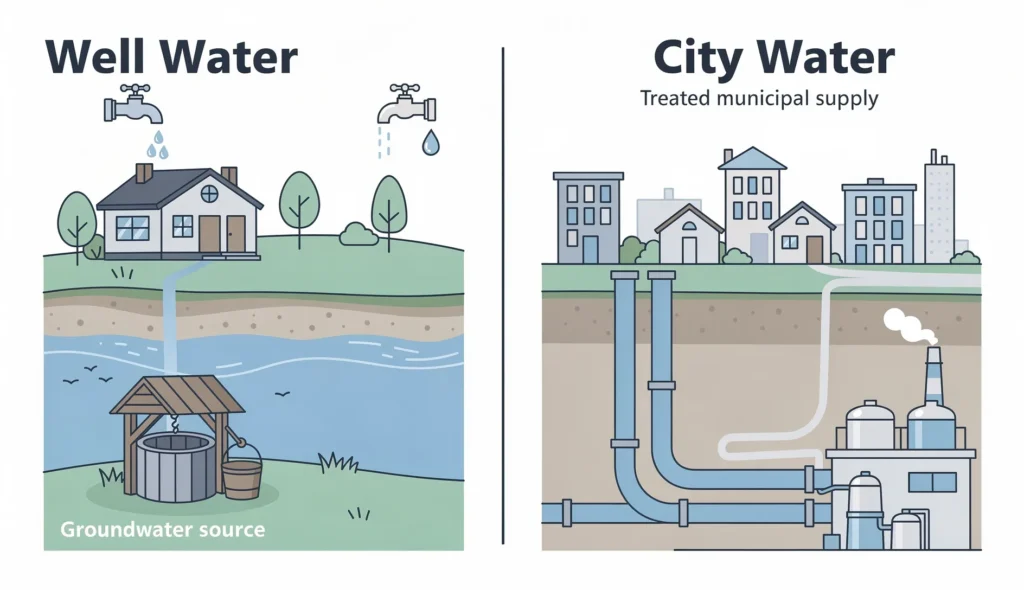
City water (also called municipal water) is treated at a central facility, tested regularly to meet EPA Safe Drinking Water Act standards, and delivered to your home through a network of underground pipes. You pay a monthly bill based on usage. Well water is drawn from an underground aquifer through a private well drilled on your property. A pump brings the water to the surface and into a pressure tank that distributes it throughout your home. There’s no monthly water bill — you own the entire system.
Well Water vs City Water: Cost Comparison
One of the biggest draws of well water is the absence of a monthly bill. After the initial drilling and installation (typically $5,000 to $15,000 depending on depth and geology), your water is essentially free. City water customers pay a monthly bill that averages $40 to $70 per month in most parts of the country, plus sewer fees that can add another $30 to $50. Over 20 years, that’s $16,800 to $28,800 — often more than the total cost of well installation and maintenance combined. However, well owners do face periodic maintenance costs. Pump replacements run $800 to $2,000, pressure tanks cost $300 to $800, and annual water testing adds $100 to $300. These expenses are intermittent but should be budgeted for.
Water Quality Differences
This is where the well water vs city water comparison gets nuanced. City water is regulated by the EPA and must meet strict standards for contaminants. It’s tested frequently and treated with chlorine or chloramine to kill bacteria. The downside? Many people don’t love the taste or smell of treated water, and aging municipal infrastructure can introduce lead or other contaminants from old pipes. Well water is not regulated by the EPA — testing and treatment are entirely the homeowner’s responsibility. The quality depends on your local geology. Many wells produce excellent water that’s rich in beneficial minerals and free of chemical treatments. Others may contain naturally occurring contaminants like iron, manganese, sulfur, arsenic, or radon that require filtration. The key difference: city water quality is someone else’s responsibility. Well water quality is yours.
Reliability and Independence
City water is generally reliable, but it’s not immune to problems. Water main breaks, boil-water advisories, and service interruptions happen. You’re also dependent on the municipality’s infrastructure and pricing decisions. Well water gives you independence from municipal systems. However, wells require electricity to run the pump — meaning you’ll lose water during a power outage unless you have a generator or battery backup. Wells can also run dry during severe droughts, though this is uncommon with properly drilled wells.
Health Considerations
Both water sources can be perfectly safe to drink, but the risks differ. City water’s primary health concerns relate to disinfection byproducts (chemicals formed when chlorine reacts with organic matter) and aging infrastructure that may leach lead or copper. Well water’s primary health concerns include bacterial contamination (coliform, E. coli), nitrates from agricultural runoff, and naturally occurring minerals like arsenic or radon. Homes with both a well and a septic system need to be especially vigilant — a failing septic system can contaminate a nearby well. The Centers for Disease Control recommends testing private well water at least once a year for bacteria, nitrates, pH, and total dissolved solids.
Making the Choice: Well Water vs City Water
For most homeowners, the choice is determined by location — if you’re in a rural area, a well may be your only option. If you’re in a subdivision, you’re likely on city water. But if you do have a choice, here’s a quick framework: Well water may be right for you if you value independence from utility companies, are comfortable with annual testing and maintenance, want water free of chemical treatments, and are willing to invest in filtration if your water quality requires it. City water may be right for you if you prefer a hands-off approach to water quality, don’t want to worry about pump maintenance or power outages, and are comfortable with monthly utility bills. Either way, knowing what’s in your water is the first step. Test it, understand the results, and invest in treatment if necessary. Need help with your well water system? Find well drilling and water treatment professionals near you in our directory.