10 Warning Signs Your Septic System Is Failing
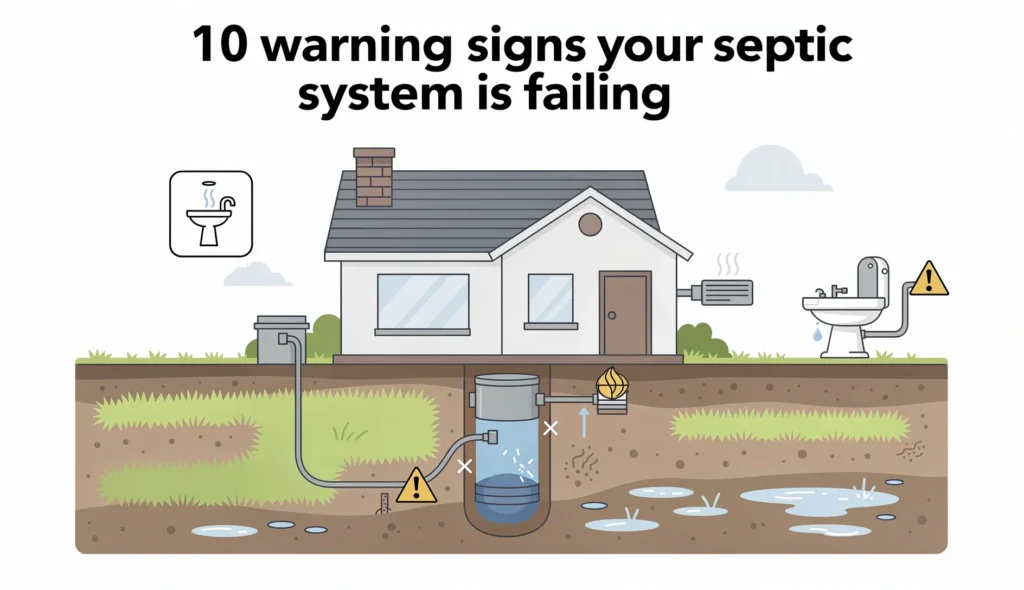
- 1. Slow Drains Throughout the House
- 2. Foul Odors Near the Tank or Drain Field
- 3. Sewage Backup in the House
- 4. Standing Water or Soggy Spots in the Yard
- 5. Unusually Lush, Green Grass Over the Drain Field
- 6. Gurgling Sounds in the Plumbing
- 7. Nitrate or Bacteria Contamination in Well Water
- 8. Algae Blooms in Nearby Ponds or Streams
- 9. The System Is More Than 25 Years Old
- 10. You Can't Remember the Last Time It Was Pumped
- What Happens If You Ignore a Failing Septic System?
A failing septic system doesn’t always announce itself with a dramatic sewage backup. More often, the warning signs are subtle — easy to overlook until a minor problem becomes a $15,000 emergency. Knowing what to watch for can save you thousands and protect your family’s health. Here are the ten most common signs that your septic system is failing and needs immediate attention.
1. Slow Drains Throughout the House
A single slow drain usually means a localized clog. But when every sink, shower, and toilet in your home is draining sluggishly at the same time, the problem is almost certainly your septic tank. This typically means the tank is full of solids and can’t accept wastewater at a normal rate. What to do: Call a septic service company for an inspection and pumping. Don’t reach for chemical drain cleaners — they can kill the beneficial bacteria your tank needs to function. (Here’s why chemical cleaners are harmful to septic systems.)
2. Foul Odors Near the Tank or Drain Field
Septic systems are designed to be odor-free when working properly. If you smell rotten eggs or raw sewage in your yard — especially near the tank or drain field — gases are escaping somewhere they shouldn’t be. What to do: This could indicate a full tank, a broken vent pipe, or a failing drain field. Schedule a professional inspection as soon as possible.
3. Sewage Backup in the House
This is the most obvious and most alarming sign of a septic system failing. When wastewater backs up through toilets, showers, or floor drains, your system has reached a critical point. The tank is either completely full or there’s a blockage in the main line between your house and the tank. What to do: Stop using water immediately. Don’t flush toilets, run faucets, or do laundry. Call an emergency septic service right away.
4. Standing Water or Soggy Spots in the Yard
Puddles or persistently wet areas near your septic tank or drain field — especially when it hasn’t rained — are a strong indicator of system failure. The tank may be leaking, or the drain field soil has become saturated and can no longer absorb effluent. What to do: Keep children and pets away from the area. Contact a septic professional to assess whether you need a repair or drain field replacement.
5. Unusually Lush, Green Grass Over the Drain Field
A strip of grass that’s noticeably greener or taller than the surrounding lawn directly over your septic lines is a red flag. It means wastewater is rising closer to the surface than it should, essentially acting as fertilizer. What to do: This doesn’t always mean total failure, but it does mean the system is stressed. An inspection can determine if it’s a pumping issue or something more serious.
6. Gurgling Sounds in the Plumbing
Air bubbles in your plumbing — heard as gurgling from toilets, sinks, or tubs — suggest that the drain flow is disrupted. When the tank is too full or the drain field is saturated, air gets trapped in the pipes and produces these sounds. What to do: If gurgling happens across multiple fixtures, treat it as a system-wide issue and get an inspection scheduled.
7. Nitrate or Bacteria Contamination in Well Water
If your home uses both a well and a septic system (as millions of rural homes do), your annual water test is a critical diagnostic tool. Elevated nitrates, coliform bacteria, or E. coli in your well water may indicate that your septic system is leaching contaminants into the groundwater. What to do: Stop drinking the water immediately and arrange for an alternative supply. Test your well and have your septic system inspected. The two issues may be directly connected.
8. Algae Blooms in Nearby Ponds or Streams
If you live near a pond, stream, or lake and notice sudden algae growth, your failing septic system could be contributing excess nutrients — particularly nitrogen and phosphorus — to the water. This isn’t just an environmental concern; it can affect your property and your neighbors. What to do: Report the issue to your local health department and have your septic system evaluated.
9. The System Is More Than 25 Years Old
Conventional septic systems have a lifespan of roughly 20 to 40 years, depending on the soil conditions, design, and how well they’ve been maintained. If your system is approaching or past the 25-year mark and you’re noticing any of the other signs on this list, age is likely a contributing factor. What to do: Have a professional assess the remaining life of your system. Proactive replacement on your timeline is far better than emergency replacement on the system’s timeline.
10. You Can’t Remember the Last Time It Was Pumped
This isn’t a physical symptom — it’s a behavioral one. If you have no records of when your tank was last pumped and can’t recall scheduling a service visit, your system is overdue. The EPA recommends pumping every three to five years. Going longer than that allows sludge to build up, clog the drain field, and cause irreversible damage. What to do: Schedule a pumping immediately and start keeping records. Many septic companies offer reminder programs that will notify you when your next service is due.
What Happens If You Ignore a Failing Septic System?
A neglected septic system doesn’t just cause inconvenience — it creates real hazards. Raw sewage contains pathogens that can cause serious illness. Contaminated groundwater can affect your drinking water well and your neighbors’. And a completely failed system typically requires full replacement, which can cost $15,000 to $30,000 or more depending on your soil and site conditions. The good news is that most septic problems are manageable and affordable when caught early. Regular inspections, timely pumping, and quick attention to warning signs will keep your system running for decades. Concerned about your septic system? Find a trusted septic service provider near you through our directory of verified professionals.