Installing a New Well – 10 Considerations Based on Different Types of Soil
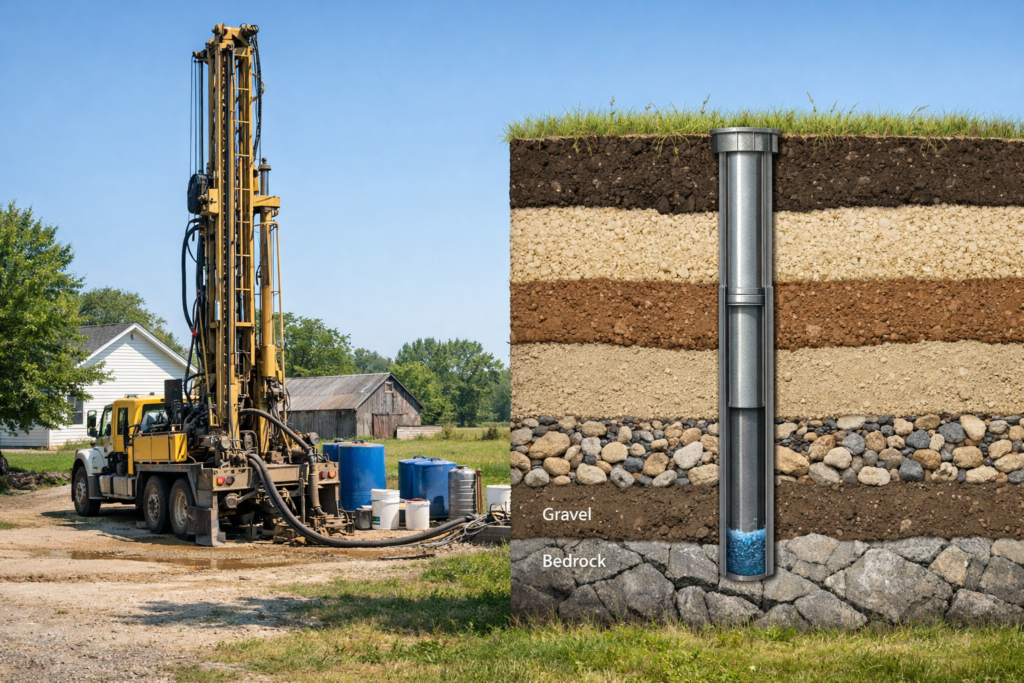
- Why Soil Matters When Installing a New Well – 10 Considerations Based on Different Types of Soil
- 1) Sandy Soil: Fast Recharge, Higher Contamination Risk
- 2) Clay Soil: Natural Filtration, Slower Recharge and Higher Turbidity During Drilling
- 3) Silt: The “In-Between” Soil That Can Cause Persistent Sediment
- 4) Gravel and Coarse Alluvium: High Yield Potential with Design Discipline
- 5) Loam: Balanced Performance, But Watch for Layering
- 6) Bedrock and Shallow Soil Over Rock: Fractures Drive Yield
- 7) Expansive Soils: Protect the Wellhead and Surface Seal
- 8) Collapsible or Unconsolidated Soils: Borehole Stability and Casing Strategy
- 9) Soil Chemistry and Corrosion: Choose Materials That Last
- 10) Permitting, Records, and Local Hydrology: Soil is Only Part of the Story
- Key Takeaways
- Planning Checklist Before You Drill
- Conclusion
This guide for installing a new well is one of the best ways to avoid costly drilling surprises and protect long-term water quality. Soil isn’t just “dirt”—it controls how fast water moves, what contaminants travel, how stable the borehole stays during drilling, and even which well materials last the longest. Whether you’re building on sandy ground near a shoreline or on heavy clay inland, understanding soil behavior helps you plan the well design, drilling method, and filtration strategy with confidence.
For background reading from a trusted source, see CDC guidance for private wells.
Why Soil Matters When Installing a New Well – 10 Considerations Based on Different Types of Soil
Soil layers influence three make-or-break outcomes: yield (how much water you can produce), quality (what ends up in your water), and constructability (how difficult and expensive drilling and casing become). Even properties a few miles apart can have entirely different soil profiles. A basic soil description (sand vs clay) is a start, but a driller will also look for layering, grain size, consolidation, and signs of shallow groundwater.
1) Sandy Soil: Fast Recharge, Higher Contamination Risk
Sandy soils drain quickly and often allow rapid groundwater recharge. That can be good for well recovery after heavy use, but it also means surface contaminants can migrate faster—especially where the water table is shallow.
- Screen and filter pack selection: Sand commonly requires a well screen and properly sized gravel (filter pack) to prevent sediment pumping and premature pump wear.
- Setbacks matter more: Keep extra distance from septic systems, livestock areas, chemical storage, and stormwater pathways because sand offers less natural filtration.
- Uncommon but practical insight: If your area has seasonal fertilizer use, test for nitrates more than once—spring runoff + sandy soil can create “spikes” that a single annual test misses.
2) Clay Soil: Natural Filtration, Slower Recharge and Higher Turbidity During Drilling
Clay acts like a barrier: water moves slowly, and contaminants often travel less readily compared to sand. However, clay can complicate drilling and development and may reduce recharge rates.
- Well yield expectations: Clay-dominant areas may produce water from deeper fractures or sand lenses rather than the clay itself.
- Drilling challenges: Clay can smear along the borehole wall, affecting formation flow until proper development clears fines.
- Uncommon but practical insight: Overuse of drilling fluids in clay can “seal” the formation. Ask your driller how they’ll develop the well (surging/airlifting) to restore permeability.
3) Silt: The “In-Between” Soil That Can Cause Persistent Sediment
Silt particles are fine—smaller than sand but larger than clay—and can stay suspended easily. Silt-heavy zones often lead to cloudy water if the well isn’t designed and developed correctly.
- Screen slot size is critical: Too large and you’ll pump silt; too small and you may restrict flow and reduce yield.
- Development time: Expect longer development to clear fines; rushing this step can mean recurring sediment problems.
- Maintenance planning: Silt-prone wells may benefit from periodic inspection and potential rehabilitation if turbidity increases over time.
4) Gravel and Coarse Alluvium: High Yield Potential with Design Discipline
Gravelly soils and coarse alluvial deposits can be excellent aquifers, often providing strong yields. The tradeoff is that high permeability can also transmit contaminants quickly if protections are weak.
- Well efficiency: Proper screen and filter pack design can produce high volumes with lower drawdown.
- Sanitary seal quality: A strong surface seal is essential because rapid pathways near the well can short-circuit contamination from the surface.
- Uncommon but practical insight: In very coarse formations, “overpumping” during development can pull fines from surrounding layers and destabilize the pack. Development should be incremental, not aggressive.
5) Loam: Balanced Performance, But Watch for Layering
Loam is a mix of sand, silt, and clay, often viewed as “ideal” for landscaping. For wells, the key is that loam usually indicates variable layering below—meaning water-bearing zones can shift quickly with depth.
- Expect heterogeneity: A loam surface doesn’t guarantee loam at depth; a driller may encounter alternating lenses of sand and clay.
- Well depth decisions: A slightly deeper well can sometimes bypass seasonal fluctuations in shallow layers.
- Water quality checks: Layered soils can produce variable mineral content; baseline testing after stabilization is important.
6) Bedrock and Shallow Soil Over Rock: Fractures Drive Yield
In areas with shallow soil over bedrock, water typically comes from fractures in the rock rather than from the soil. Two wells drilled close together can have very different yields depending on fracture networks.
- Site selection: Small moves in location can matter. Local drilling records are extremely valuable for predicting success.
- Casing depth: Casing must extend through overburden to competent rock, reducing the chance of surface water intrusion.
- Uncommon but practical insight: If your region has naturally occurring metals (like arsenic) in certain rock types, the “best yield” zone may not be the “best quality” zone. Consider both when selecting final depth.
7) Expansive Soils: Protect the Wellhead and Surface Seal
Some clays are expansive—swelling when wet and shrinking when dry. This movement can stress wellhead components and create pathways for contamination if the seal cracks.
- Wellhead integrity: Ensure the well cap, casing stick-up height, and surrounding pad are built to handle seasonal movement.
- Grading and drainage: Keep surface water flowing away from the well. Poor grading in expansive soils can accelerate seal failure.
- Material selection: Discuss casing and seal materials suited to your conditions and local code requirements.
8) Collapsible or Unconsolidated Soils: Borehole Stability and Casing Strategy
Loose, unconsolidated soils (certain sands, silts, and mixed fills) can collapse into the borehole during drilling. This can increase costs and compromise the final construction if not handled properly.
- Drilling method: Rotary methods with appropriate fluid management or temporary casing may be required.
- Screen placement: Properly placing screens in stable, water-bearing intervals reduces sediment production and extends pump life.
- Uncommon but practical insight: If your property has been previously graded or filled, the first 10–20 feet may be disturbed and unpredictable. A deeper sanitary casing through the disturbed zone can reduce long-term contamination risk.
9) Soil Chemistry and Corrosion: Choose Materials That Last
Soil and groundwater chemistry can corrode well components, especially in acidic conditions or where dissolved minerals are high. Corrosion isn’t just a “metal casing” issue—it can affect fittings, pump components, and even cause taste/odor problems.
- Material compatibility: Consider stainless steel screens in aggressive environments, or confirm PVC suitability based on depth/temperature and local regulations.
- Water testing beyond basics: Ask for pH, hardness, iron, manganese, chlorides, and sulfates—these help predict scaling or corrosion tendencies.
- Protective design: Proper grout/seal and minimizing oxygen exposure in some contexts can reduce corrosion-related issues.
10) Permitting, Records, and Local Hydrology: Soil is Only Part of the Story
Even with great soil conditions, local rules and hydrology can shape your well’s success. Setbacks, minimum casing depths, grouting standards, and disinfection requirements vary widely by jurisdiction.
- Use nearby well logs: Local well records often reveal typical depths, yields, and problem zones—information more reliable than general assumptions.
- Plan for drought resilience: In areas with shallow aquifers (often correlated with sandy soils), consider whether a deeper, more stable water-bearing zone is available.
- Budget realistically: Soil variability can change drilling time, casing length, development effort, and the need for filtration/treatment.
Key Takeaways
- Sandy and gravel soils can yield well but may require stronger protection against contamination and sediment.
- Clay and expansive soils may filter better but can reduce recharge and stress seals and wellhead components.
- Silt and unconsolidated layers demand careful screen sizing and thorough well development to avoid chronic turbidity.
- Bedrock areas depend on fractures; nearby well logs and water-quality considerations are essential.
- Soil chemistry influences corrosion and scaling—material choice and water testing protect long-term performance.
Planning Checklist Before You Drill
- Confirm local setbacks and permits (septic, property lines, waterways, livestock areas).
- Gather nearby well logs and ask your driller what depths and formations are typical.
- Decide your priorities: higher yield, best water quality, drought resilience, or lower upfront cost.
- Discuss screen, casing, grout, and development based on your soil type and expected layers.
- Schedule post-install water testing and retest after a stabilization period if recommended.
Conclusion
Installing a New Well comes down to matching the well design to the ground you actually have—not the ground you assume you have. Sandy and gravelly soils may offer excellent yield but need strong contamination safeguards; clay and silt may demand more careful drilling and development to prevent turbidity and low flow; bedrock depends on fractures and can vary dramatically even within the same neighborhood. Work with a licensed well contractor, use local well records, and plan for water testing and material selection so your new well stays productive, safe, and reliable for years.
If you’d like, I can tailor these recommendations to your region by factoring in typical soil profiles, local regulations, and common water-quality issues.